Describe How Prices Are Determined in a Competitive Market
In a competitive market no single producer or consumer can dictate the market. There is a tendency for prices to return to this equilibrium unless some characteristics of demand or supply change.
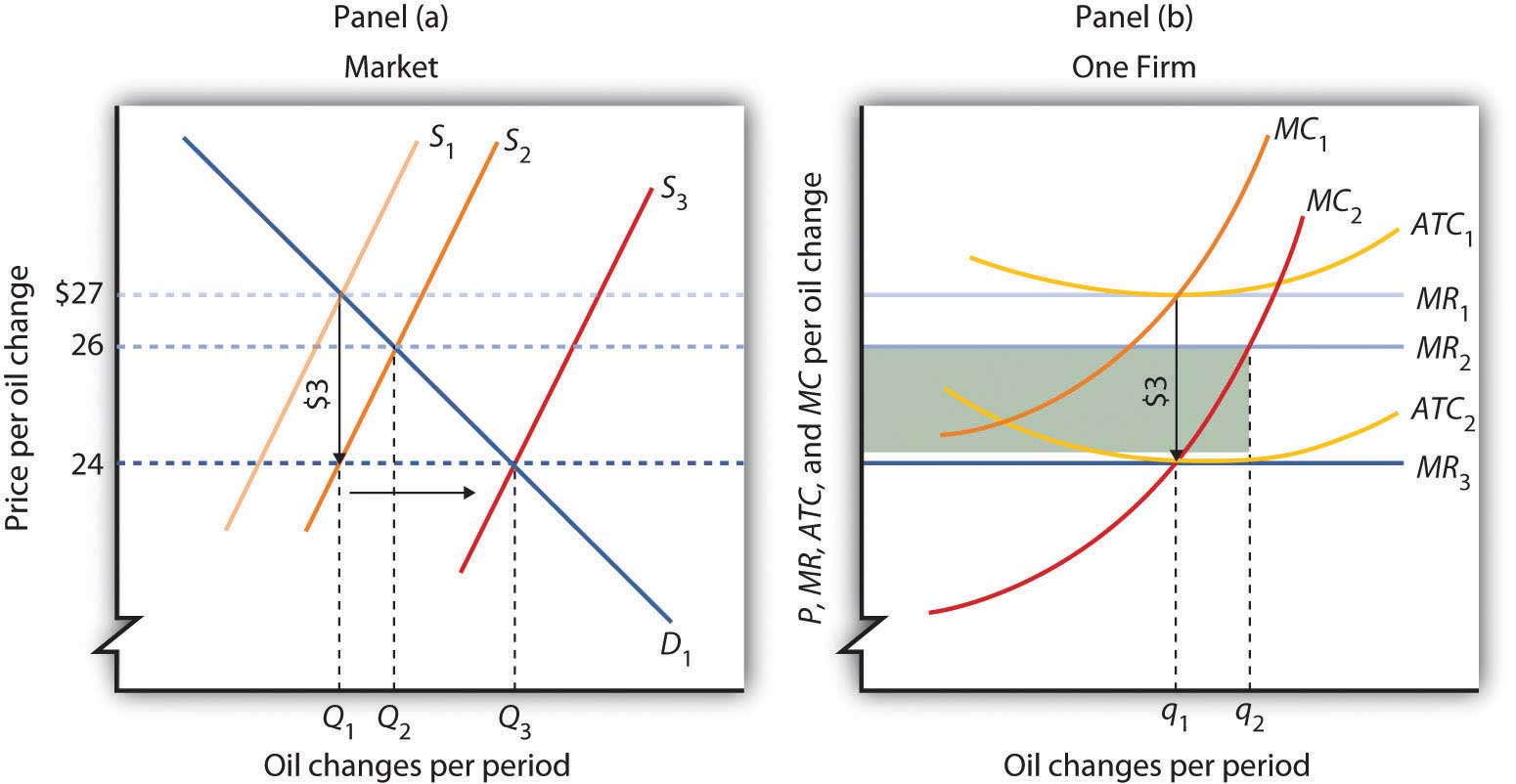
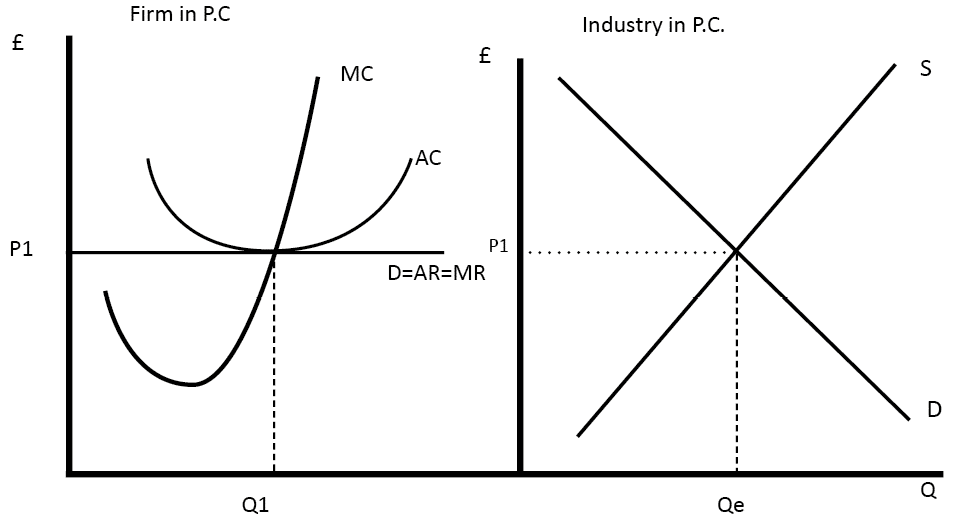
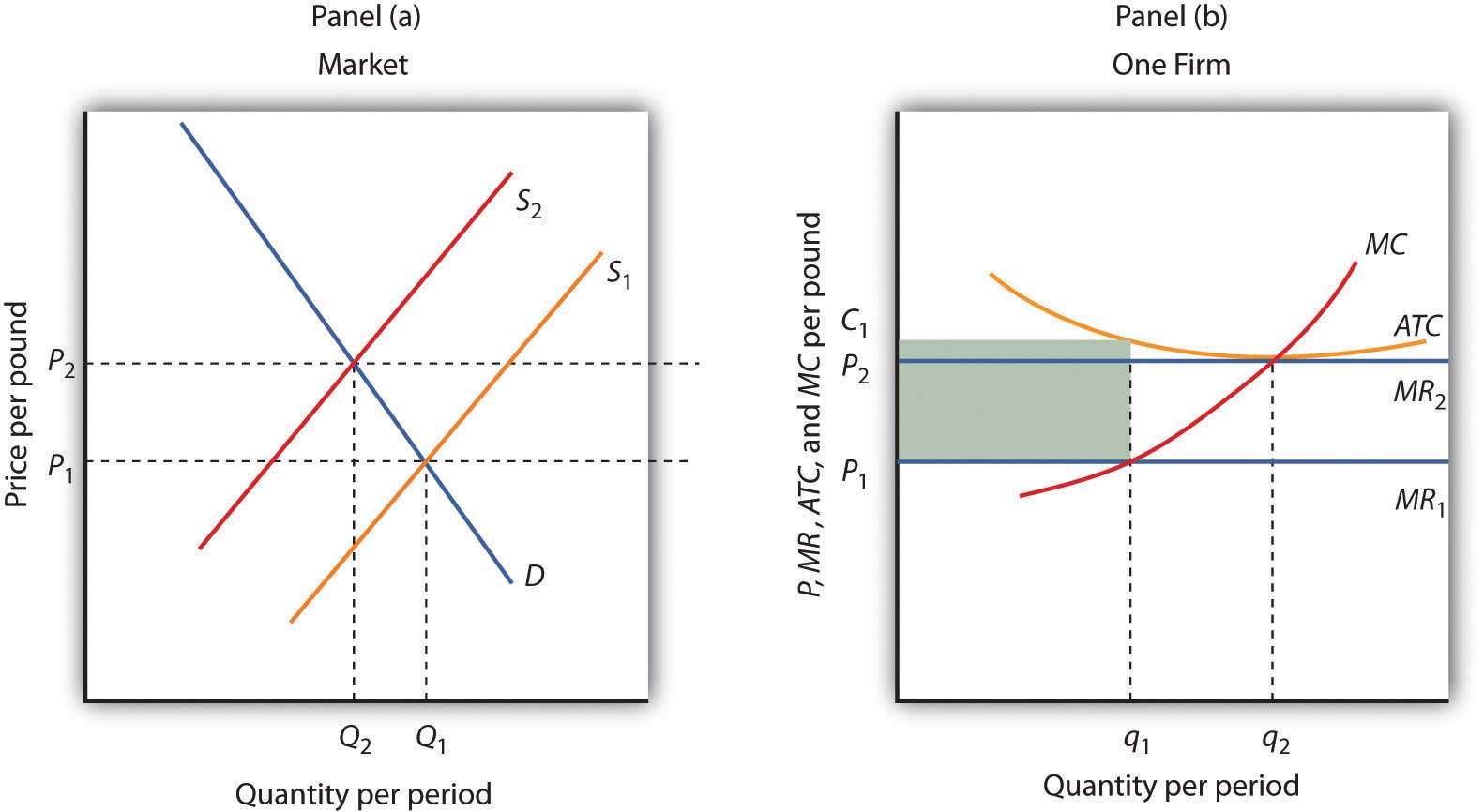
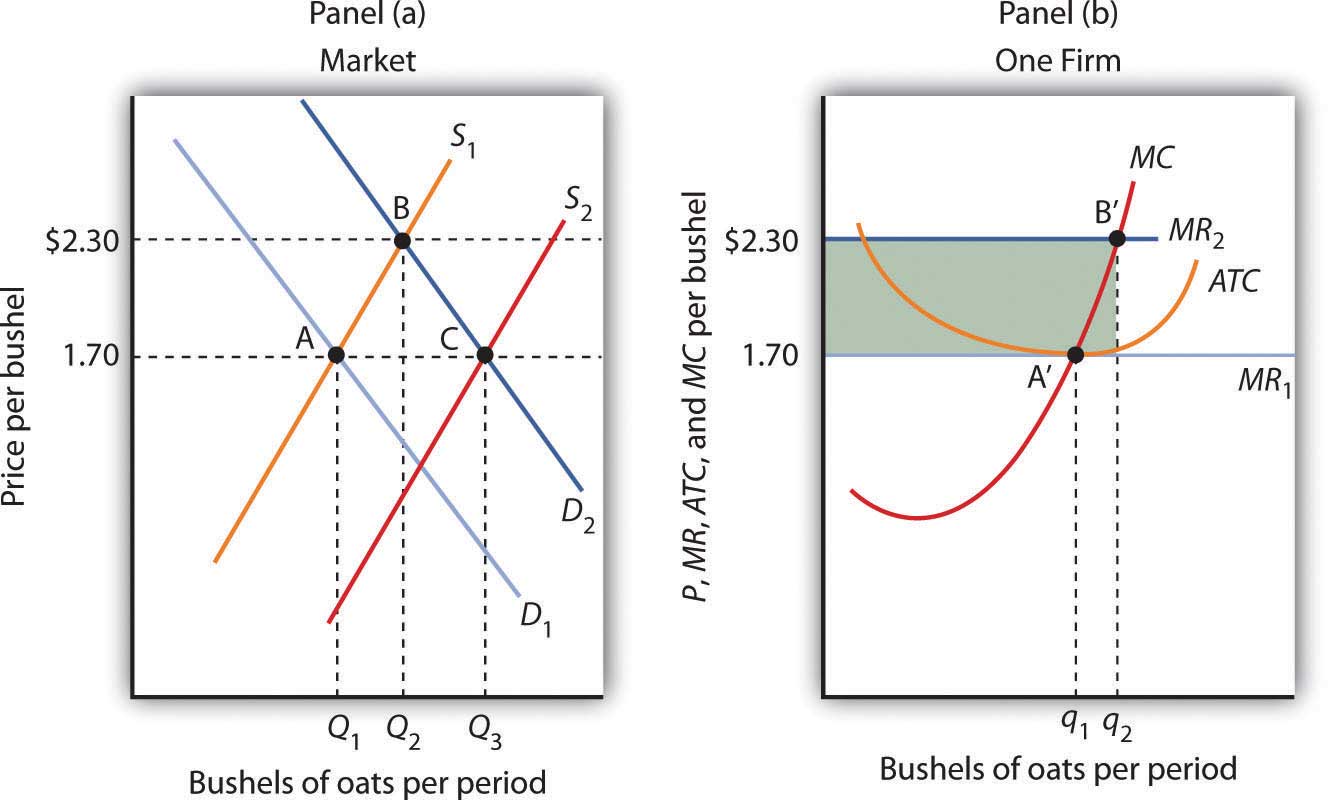
Perfect Competition In The Long Run
- A market is highly competitive when there are a large number of buyers and sellers all passively accepting the ruling market price that is set not by individual decisions but by the interaction of all those taking part in the market.
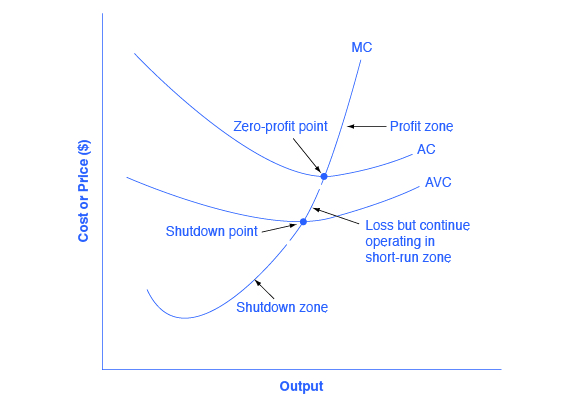
. Equilibrium of a firm. Think of what firms attempt to optimize and how they go about doing this in perfect competitive markets. Here is an introduction to the concept of a competitive.
Price in a perfectly competitive market always equals the marginal cost of production in the long run in a perfectly competitive market entry and exit drive economic profit to. Pricing under monopoly like that under perfect competition is determined by demand and supply conditions in the market. Equilibrium signifies a state of balance where the two opposing forces operate subsequently.
Here prices are determined by competitors. In a Perfectly Competitive Market or industry the equilibrium price is determined by the forces of demand and supply. Therefore firms cannot influence the price in their individual capacities.
Therefore its important to understand precisely what a competitive market is. Since the number of consumers is large even under monopoly the monopoly is similar to the pure competitive market so far as the demand side as a whole ie. B Why are they determined in this way.
Short run is defined as a period of time when at least one input is fixed. The tendency of the buyers to bid up prices when there is excess demand implies an upward pressure. Oligopolistic Competition Market Pricing Strategy.
Market prices are dependent upon the interaction of demand and supply. A Using an example of a product in a perfect competitive market describe how output Q and price P are determined in that market. Under monopoly too the price of a good is determined by the interaction of supply and demand but in a different way.
In monopolistic competition since the product is differentiated between firms each firm does not have a perfectly elastic demand for its products. Prices are determined in a free market economy through the interactions of supply and demand in the marketplace where demand is the quantity of a product that buyers are willing to purchase according to a given price and supply is the amount of a product that sellers can vendor to customers at a given price. We know in a market price is determined by the interaction of supply and demand.
All competitive markets share five characteristics. In a competitive market firms are price-takers. B Why are they determined in this way.
A Using an example of a product in a monopolistically competitive market describe how output Q and price P are determined in that market. In such a market all. Firms in this market structure are highly dependent on one another when setting prices.
Price-output determination under Monopolistic Competition. An equilibrium is typically a state of rest from which there is no possibility to change the system. Changes in the equilibrium price occur when either demand or supply or both shift or move.
Once the market price is determined an individual seller in the market will take the price as given and constant. Since in a perfectly competitive market the product is homogeneous and no buyer has any preference for a particular seller therefore a single uniform market price will be established in the market. In a perfectly competitive market where the product is homogeneous and the price is determined by the market forces the quantity of output to be produced alters the profit.
But under monopoly the monopolist is the sole seller of a commodity. An equilibrium price is a balance of demand and supply factors. As a result competition is based on product differentiation and services but not on.
- A market in which the large number of buyers and sellers possess good market information and can easily enter or leave the market. Conclusion Some businesses in the B2C space especially E-Commerce might be wholly dependent on competitive pricing but in B2B SaaS competitor data shouldnt directly translate as a central focal point. During short period there may be three situations of the firms under monopolistic competition as given below.
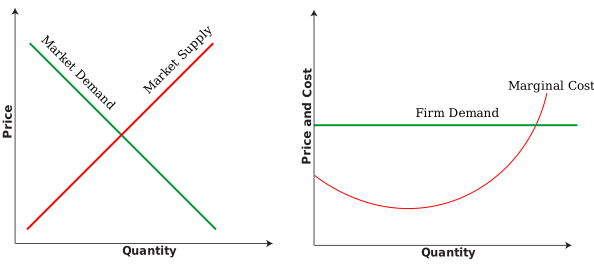
Under perfect competition there will be several number of sellers. The point of equilibrium of an individual firm will be at the point where its marginal cost is equal to its marginal revenue MCMR. The following figure shows a firms demand curve under perfect competition.
Industry demand is concerned. More demand and less supply and competition between buyers as a result will force the price up until excess demand is completely wiped out. Competition based pricing is a bad case of plagiarism when implemented alone and will help you sustain in the market only for a short while.
Let us continue our example on page 161 in which demand and supply schedules for the industry were as follows. In various market economy theories price plays an. Think of what firms attempt to optimize and how they go about doing this in monopolistically competitive markets.
Firm in a perfectly competitive market is a horizontal one at the level of market price set by the industry and firms have to choose that level of output which yields maximum profit. They have to follow the price determined by the industry. Based on marginal revenuemarginal cost analysis a Using an example of a product in a perfect competitive market describe how output Q and price P are determined in that market.
The reason being the presence of a large number of firms who produce homogeneous products. Under monopolistic competition price and output are determined as under other type of market structure during short period. With only a few sellers in an oligopoly a company can affect the market prices but cannot control the whole market.
The Institute of Chartered Accountants of India. When economists describe the supply and demand model in introductory economics courses what they often dont make explicit is the fact that the supply curve implicitly represents quantity supplied in a competitive market.
8 2 How Perfectly Competitive Firms Make Output Decisions Principles Of Economics
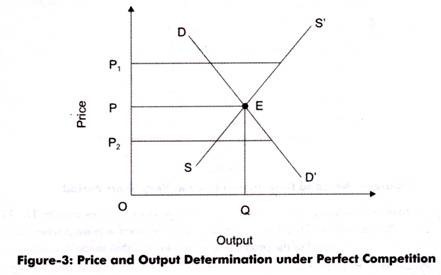
Price And Output Determination Under Perfect Competition

Price Determination Under Perfect Competition Economics Shaalaa Com
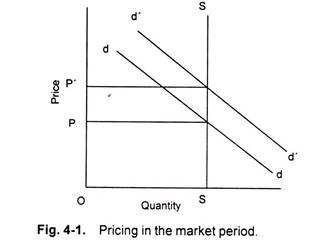
Price Determination Under Perfect Competition Markets Economics
1.jpg)
Price And Output Determination Under Perfect Competion Notes Videos Qa And Tests Grade 12 Economics Theory Of Price And Output Determination Kullabs
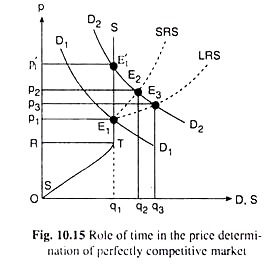
Price Determination In A Perfectly Competitive Market
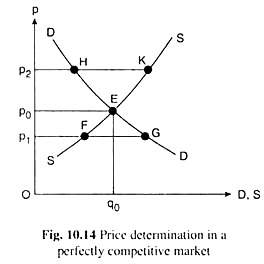
Price Determination In A Perfectly Competitive Market
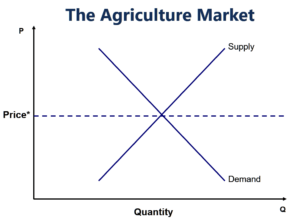
Price Taker Learn More About Price Takers Vs Price Makers
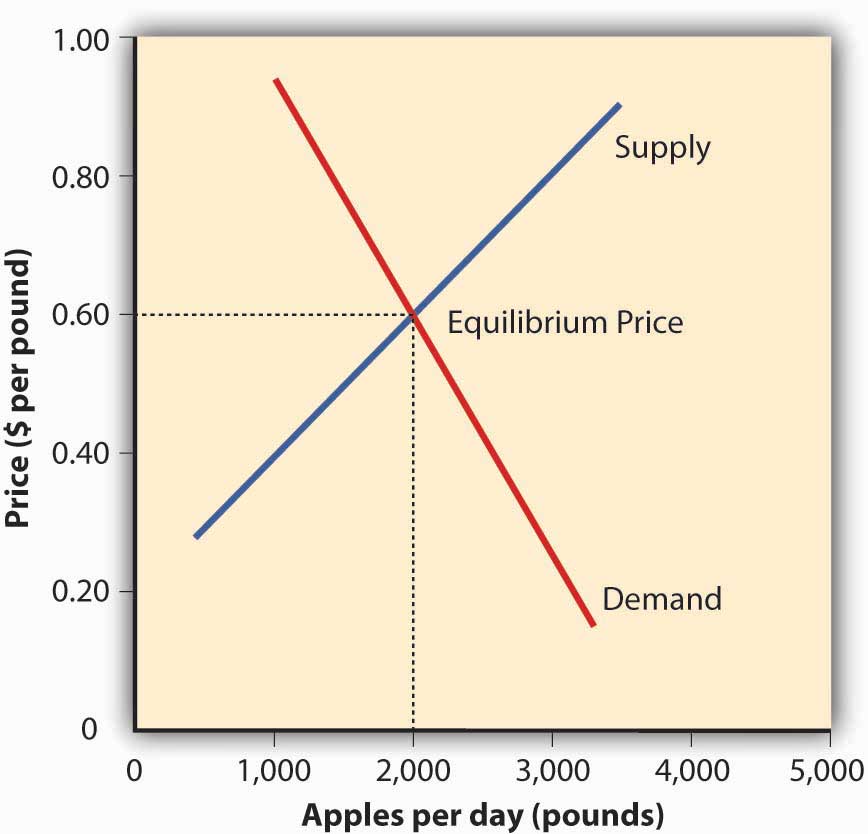
1 4 Perfect Competition And Supply And Demand Exploring Business

Price Determination Under Perfect Competition Equilibrium Of Firm

Equilibrium Under Perfect Competition Perfectly Competitive Market
Perfect Competition Economics Help
Pure Competition

Price Determination Under Perfect Competition Equilibrium Of Firm
Perfect Competition In The Long Run

Price Determination Under Perfect Competition Equilibrium Of Firm
Perfect Competition In The Long Run

Reading Price And Revenue In A Perfectly Competitive Industry And Firm Microeconomics

Long Run Equilibrium Of Competitive Firm And Industry


Comments
Post a Comment